The Fabric Edit: How Textiles Shape the Way We Experience Fashion
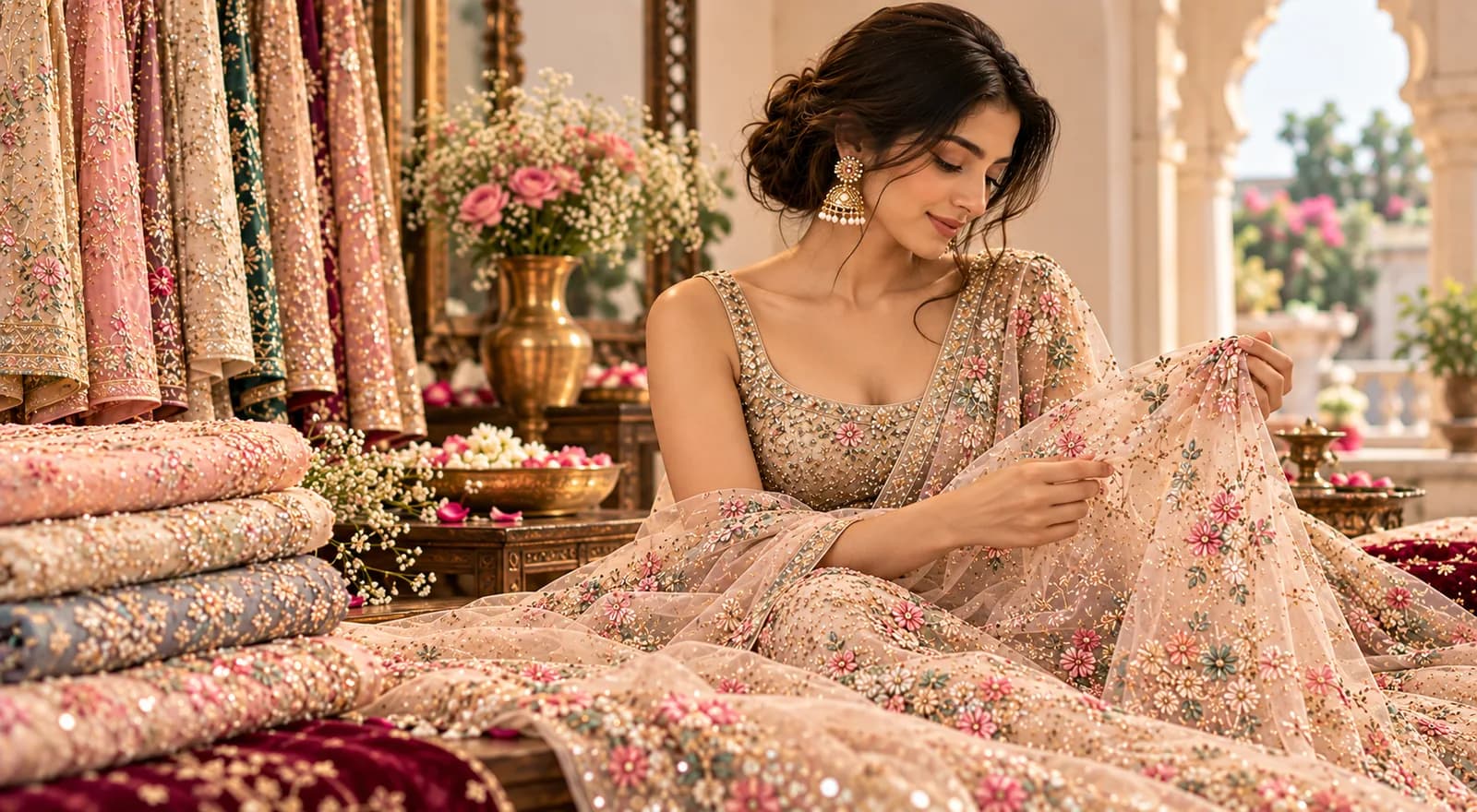
Fashion usually gets our attention through colour, silhouettes and styling.
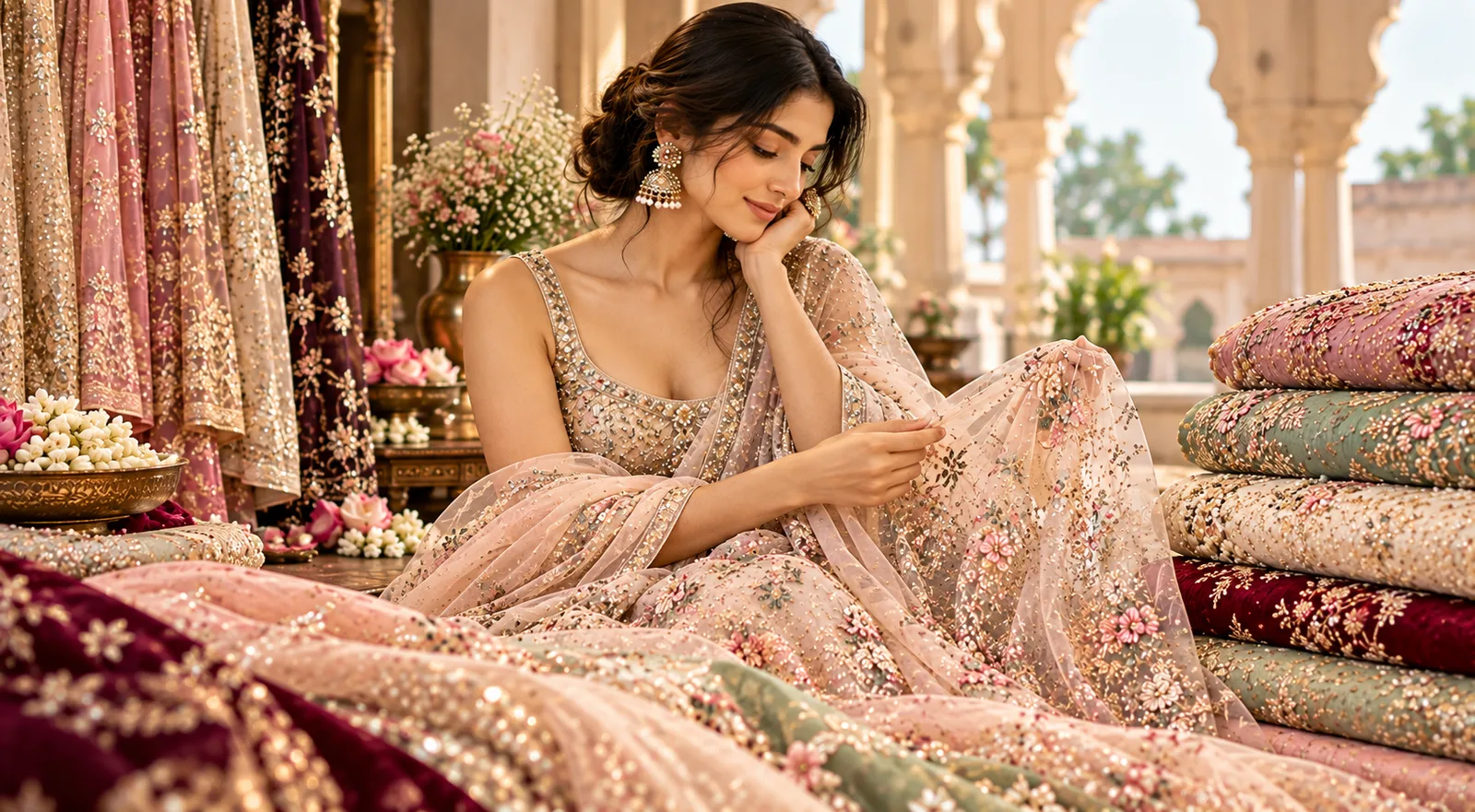
But before a dress becomes a dress, a saree becomes a saree, or a beautiful lehenga appears in a wedding photograph, there is something much simpler involved:
Fabric.
It is easy to overlook because fabric sits underneath everything else. Yet it influences almost every part of an outfit — how it falls, how it moves, how it catches light, how comfortable it feels and even how luxurious it appears.
That is what makes textiles so interesting.
Why Two Similar Outfits Can Look Completely Different
Imagine two outfits with the same cut and embroidery.
One is made from soft georgette.
The other is made from crisp organza.
On paper, the design is identical.
In reality, they can look like completely different outfits.
Georgette tends to create a softer, flowing appearance. Organza brings structure and a slightly architectural quality. Velvet adds depth, while brocade introduces texture and a traditional richness.
The lesson is simple:
The fabric isn't just carrying the design. It is helping create the design.
Fabric and the Occasion
Choosing fabric becomes even more important when you're dressing for a particular occasion.
A daytime summer celebration may call for something lightweight and breathable.
A winter wedding gives you more freedom to experiment with richer and heavier textiles.
A cocktail evening might invite shimmer, structure or fluid drape.
A traditional wedding ceremony may lend itself beautifully to brocades, silks, zari work and elaborate embroidery.
There isn't one fabric that works for every occasion.
The better question is:
What do I want the outfit to feel like?
Elegant?
Playful?
Traditional?
Contemporary?
Dramatic?
Once you answer that, choosing the textile becomes much easier.
The Beauty of Texture
One of the most underrated aspects of fashion is texture.
Think about running your hand over velvet compared with touching organza.
Think about the difference between a plain fabric and one covered in delicate embroidery.
Think about how sequins catch light as someone moves across a room.
These small details create visual depth.
This is particularly important in occasionwear, where fabrics are often layered with embroidery, beads, sequins, zari, threadwork or other surface techniques.
A fabric doesn't have to be heavily decorated to look expensive. Sometimes a beautiful texture and thoughtful construction are enough.
Why Fabric Shopping Shouldn't Be Rushed
Online shopping has made fashion incredibly convenient.
You can scroll through hundreds of options without leaving your sofa.
But there is one thing photographs cannot completely communicate: how a fabric behaves.
Is it soft?
Does it have weight?
Is it transparent?
Does it have a natural sheen?
Does it drape or hold its shape?
How does the embroidery sit on the surface?
These questions matter because the fabric you see on a screen eventually has to become a real garment.
That is why browsing a specialist textile retailer such as Paras Gallery Fabrics can be useful when you're trying to understand the variety of fabrics available for Indian fashion and occasionwear.
The Fabric Should Work With the Design
A common mistake is choosing the fabric first because it looks beautiful and then trying to force a design around it.
Sometimes that works.
Sometimes it doesn't.
A heavily embellished fabric may need a relatively clean silhouette so the garment doesn't become visually overwhelming.
A simple fabric, on the other hand, can provide the perfect canvas for an interesting cut, dramatic drape or statement styling.
The relationship between textile and construction is what ultimately creates the finished garment.
Wedding Fashion Makes This Especially Obvious
Indian wedding fashion is perhaps one of the best examples of how fabric can transform an outfit.
A sheer embroidered net can become a delicate dupatta.
Organza can create structured sleeves or a dramatic layered silhouette.
Velvet can bring richness to winter celebrations.
Brocade can introduce traditional motifs and texture.
Georgette can create the movement needed for an outfit that needs to survive an evening of dancing.
And then there are the countless combinations.
Fabric doesn't have to be used in isolation. Combining textures can make an outfit much more interesting.
A structured blouse with a flowing skirt.
A heavily embroidered dupatta with a simpler outfit.
A textured fabric paired with a clean contemporary silhouette.
The possibilities are almost endless.
Fashion Trends Change. Textile Appreciation Doesn't.
Fashion trends can move quickly.
Colours come and go.
Silhouettes change.
Certain embellishments become popular and then disappear.
But our relationship with textiles is much older than any trend cycle.
People have always cared about how fabrics feel, move and look.
That is why traditional textiles continue to appear in contemporary fashion. Designers may reinterpret them, change the silhouettes or combine them with modern techniques, but the underlying fascination with beautiful fabric remains.
Perhaps that is what makes textiles so timeless.
A Better Way to Choose Your Next Fabric
The next time you're choosing fabric, don't start by asking:
"What's trending?"
Instead, try asking:
What am I making?
Where will I wear it?
What season is it?
Do I want movement or structure?
How much embroidery will it have?
How do I want the finished outfit to feel?
These questions can take you much closer to the right choice.
Because good fashion isn't necessarily about choosing the most elaborate material.
It is about choosing a textile that makes sense for the garment, the occasion and the person wearing it.
The Fabric Is Where the Story Begins
We often remember a beautiful outfit because of its overall appearance.
But behind that appearance is a series of choices — the colour, the silhouette, the embellishment, the construction and, perhaps most importantly, the fabric.
The next time you admire a beautiful outfit, look a little closer.
Notice how the material moves.
Look at the texture.
Watch how it catches the light.
Think about what the same design might look like in a completely different textile.
You may start seeing fashion differently.
Because sometimes the most interesting part of an outfit isn't the design you notice first.
It's the fabric that makes the design possible.