From Fabric Roll to Pheras: The Journey of a Bridal Lehenga
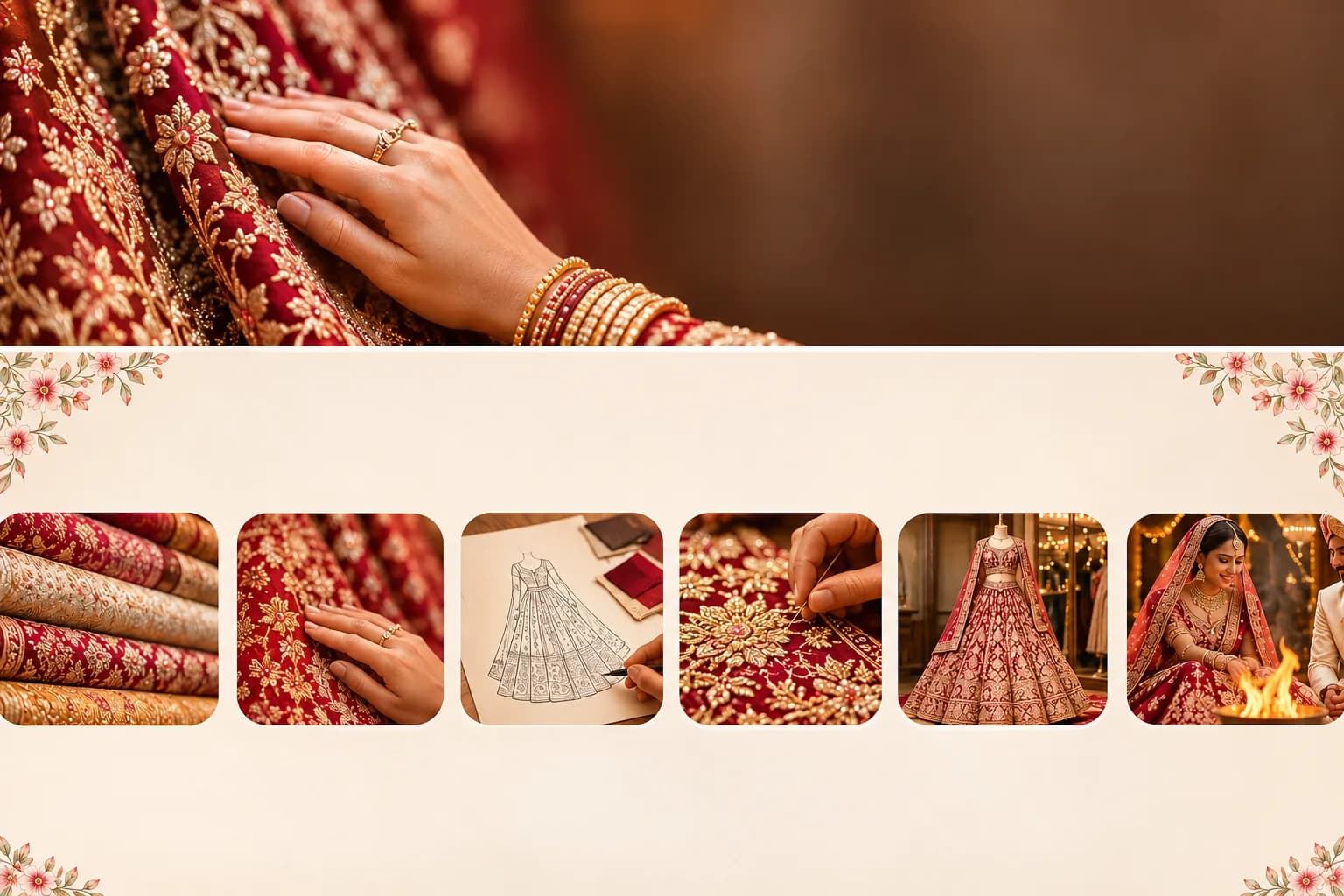
On the wedding day, everyone sees the finished lehenga. They see the colour, the shine of the zari, the way the dupatta falls during the pheras. What they don’t see is the long journey it took to get there.
A bridal lehenga starts as a roll of fabric on a shelf. Over the following weeks, it passes through many hands: the bride’s, her family’s, the fabric seller’s, the master cutter’s, the embroiderers’ and the tailor’s. Each of them adds something. This is the story of that journey, and what brides can learn from each step.
Chapter one: the first touch
Most bridal lehengas begin with a visit to a fabric store, usually with family in tow. There’s a moodboard saved on a phone, a rough idea of colour, and a lot of opinions.
The first few fabrics are almost never the ones that get chosen. Something happens when a bride actually holds the cloth. A colour she loved on screen looks different against her skin. A fabric she had never considered, maybe a soft raw silk or a heavier brocade, suddenly feels right.
This is the moment where the lehenga really begins. The best advice at this stage is simple: feel everything, carry it to the window, and drape it over your shoulder before you decide. Fabric stores like Paras Gallery Fabrics in Lajpat Nagar, Delhi, let brides compare silks, brocades, georgettes and organzas side by side, which makes this first choice far easier.
Chapter two: the plan
Once the fabric is chosen, the conversation moves to the tailor or designer. This is where the lehenga takes shape on paper.
Measurements are taken. The silhouette is decided: a full flare, an A-line, a fish cut. The placement of the borders and embroidery is sketched out. Will the heavy work sit at the hem or run up in panels? Will the blouse be fully worked or kept simpler so the skirt stands out?
Good tailors ask questions here that brides don’t always think of. How long will you be sitting? Will you dance? Do you want to rewear the blouse later? The answers change the plan.
Chapter three: the first cut
Cutting a bridal fabric is a quiet, careful moment. The master cutter lays the fabric flat, checks the grain, lines up the borders and marks every piece with chalk. With expensive or embroidered fabric, there’s no room for mistakes. One wrong cut can waste metres of cloth.
This is also why buying a little extra fabric matters. A small buffer allows for adjustments, matching borders, or fixing a mistake without hunting for the same design weeks later.
Chapter four: the embroidery
If the lehenga is being embroidered after cutting, it now goes to the karigars, the skilled artisans who do the handwork. Stretched on a large wooden frame called an adda, the fabric is slowly covered in zardozi, dabka, sequins or resham, stitch by stitch.
This is the longest part of the journey. Heavy bridal work can take weeks, depending on the design and the number of artisans working on it. It’s also why brides are always told to start early. The beauty of handwork comes from time, and time is the one thing that can’t be rushed close to the wedding.
Chapter five: the fittings
When the panels come back, the lehenga is stitched together and the fittings begin. The first trial is often a mix of excitement and nerves. The blouse may need taking in. The skirt length may need adjusting for heels. The can-can underneath may need more or less volume.
Most good bridal outfits go through at least two fittings. Each one brings the lehenga closer to the bride’s body and the way she moves. This is the stage where comfort is fine-tuned: a softer lining here, a lighter can-can there, a dupatta pin placed exactly where it needs to be.
Chapter six: the wedding day
Then the day arrives. The lehenga is steamed, the dupatta is pinned, and the bride steps out. Weeks of decisions come together in a single moment that usually lasts only a few seconds before the photographs start.
What makes a lehenga feel right on the day isn’t only how it looks. It’s whether the bride can walk in it, sit through the rituals and hug her family without worrying about the outfit. The best lehengas are the ones she forgets she’s wearing, because she’s too busy living the day.
Epilogue: what happens next
After the wedding, the lehenga goes back into its cotton cloth and into a cupboard. Some brides restyle the blouse or dupatta for later functions. Some keep it exactly as it is, for a daughter or a niece one day.
Either way, a bridal lehenga carries more than fabric and thread. It carries the afternoon it was chosen, the nervous first fitting, and the moment it was finally worn. It’s one of the few garments that really is a story.
Conclusion
Every bridal lehenga is the work of many hands and many decisions, and it starts with something as simple as touching a fabric for the first time. If you’re planning your own, give yourself time, choose your fabric in person, ask your tailor lots of questions, and enjoy each chapter of the journey. The finished lehenga will be worth it.