Fabric Questions Designers Ask Before Starting a New Bridal Outfit
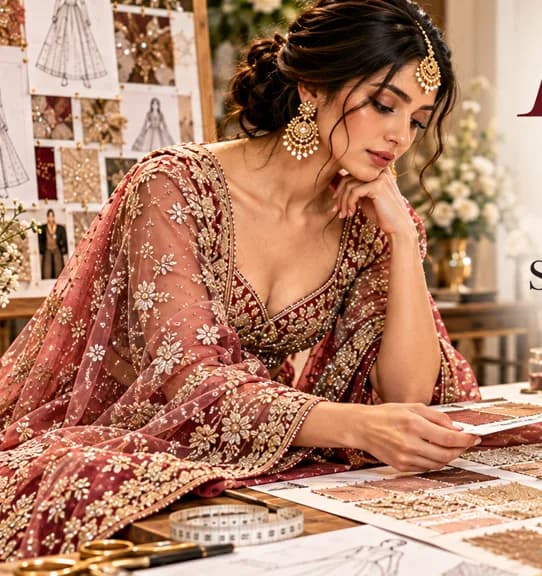
Fabric Questions Designers Ask Before Starting a New Bridal Outfit
A bridal outfit usually begins long before the first stitch.
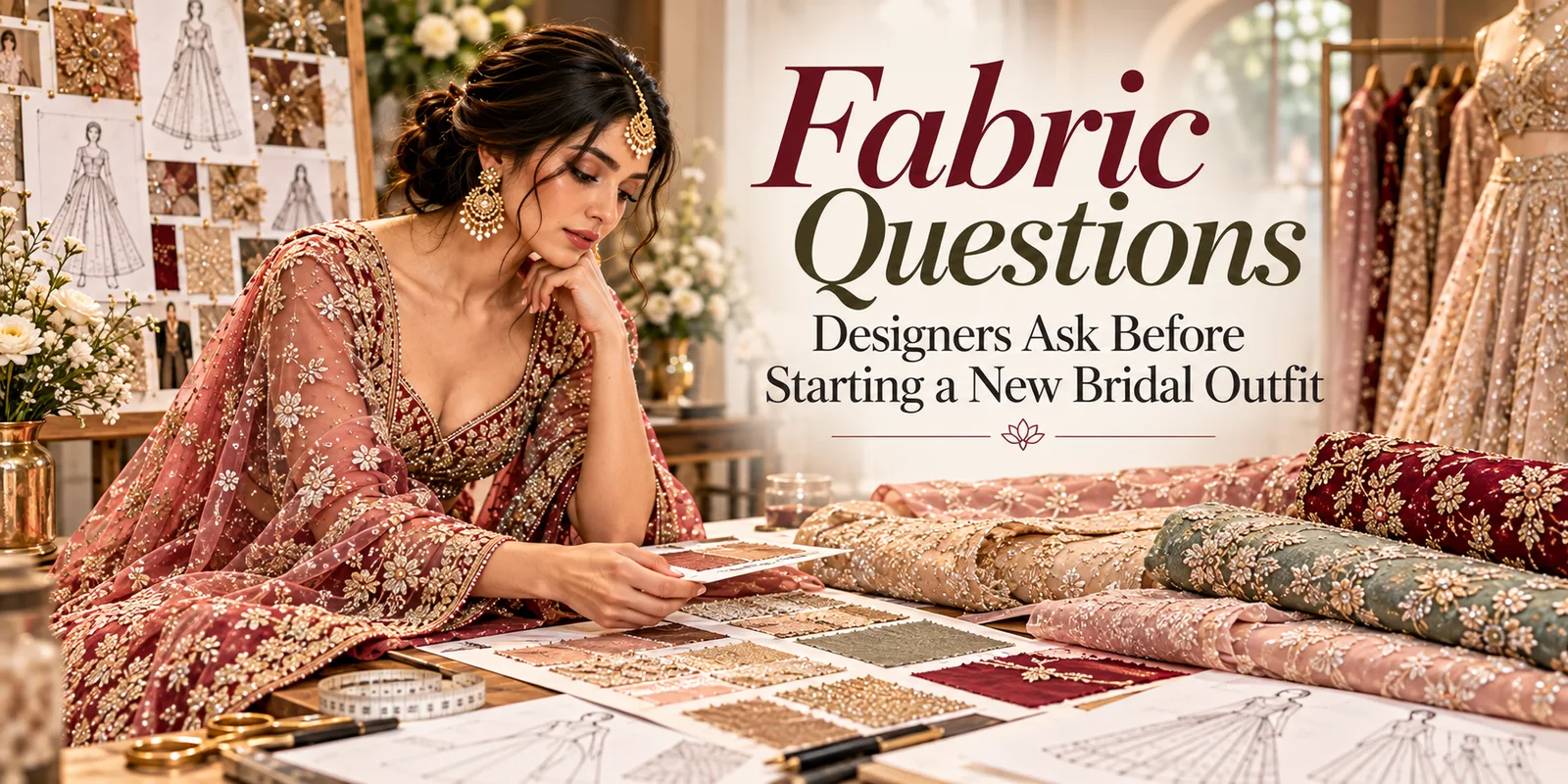
There is a sketch, a colour palette, embroidery reference, silhouette—and somewhere in between all of these decisions comes the question that can determine how the finished garment behaves:
Which fabric should we actually use?
For designers and boutique teams, fabric selection is rarely just about finding something beautiful. The material has to work with the silhouette, embroidery, movement, occasion, cutting plan and production requirements.
Here are some of the questions worth asking before ordering fabric for a new bridal outfit.
Q1. Should I choose the fabric first or the design first?
There isn't one universal answer.
For a highly structured design, the silhouette may determine the fabric. For an embroidered bridal outfit, the fabric itself may inspire the design.
A designer working with a heavily embellished net, for example, may develop a different silhouette from one built around a structured brocade.
The important thing is to understand the relationship between the two.
Design and fabric should be selected together—not treated as completely separate decisions.
Q2. Which fabrics work well for bridal lehengas?
That depends on the intended silhouette.
A bridal lehenga requiring structure may call for a fabric with more body, while a softer, flowing design may benefit from a fabric with more movement.
Common options include:
- Net
- Georgette
- Brocade
- Silk
- Tissue
- Organza
- Crepe
- Velvet
Each produces a different visual and physical result.
For example, a brocade can contribute structure and a traditional surface, while an embellished net can create a lighter, layered appearance.
Paras Gallery Fabrics' Bridal Bliss collection brings together bridal fabrics across net, brocade, georgette, crepe, tissue and organza, making it useful as a reference point when comparing different fabric constructions.
Q3. How important is fabric width?
More important than many first-time buyers realise.
Fabric length tells you how many metres you are buying.
Width tells you how those metres can actually be used.
A narrow fabric may require more joins or create greater cutting wastage. A wider fabric may allow pattern pieces to be arranged more efficiently.
Width becomes particularly important when working with:
- Lehenga panels
- Wide dupattas
- Sarees
- Large sleeves
- Borders
- Directional embroidery
- Large motifs
It is therefore useful to check both total width and usable width before confirming an order.
Q4. Does embroidery change how I should choose the base fabric?
Absolutely.
A fabric that works beautifully without embellishment may behave differently once it carries thousands of sequins, beads, zari elements or embroidery stitches.
Before selecting the base, consider:
How heavy is the embellishment?
Where will it be concentrated?
Does the fabric have enough support?
How will it drape after embroidery?
Will the embroidery change the way the garment moves?
These questions are especially relevant for heavily embellished bridalwear.
Q5. Should I buy a sample before ordering several metres?
For a new design, a physical sample can be extremely useful.
A photograph can show colour and surface detail, but it cannot fully communicate:
- Hand feel
- Weight
- Drape
- Transparency
- Stiffness
- Surface texture
A small sample can also be placed beside the embroidery, lining and other fabrics before the final decision is made.
This is particularly helpful when several colours look similar online.
Q6. Why can the same colour look different on different fabrics?
Because colour doesn't exist independently of the surface carrying it.
A matte georgette, glossy tissue, textured brocade and transparent net can all interpret the same nominal colour differently.
Light interacts with each surface in a different way.
That is why a designer should evaluate colour together with:
Texture + sheen + transparency + weave + embroidery
rather than relying only on a colour name.
Q7. Does the border affect fabric consumption?
Yes.
A heavily embroidered border isn't simply decorative—it can influence how the fabric is cut.
The designer may need to account for:
- Border direction
- Border width
- Placement
- Number of panels
- Matching requirements
- Extra cutting allowance
If the border is intended for a lehenga hem, blouse or dupatta edge, the pattern should be planned around it.
This is one reason pre-cut planning is useful before estimating the final number of metres.
Q8. What if I need fabric for several parts of the outfit?
This is where fabric planning becomes particularly important.
A bridal outfit may require separate quantities for:
- Lehenga
- Blouse
- Dupatta
- Sleeves
- Borders
- Panels
- Additional detailing
The same fabric may be used throughout—or the designer may deliberately combine different materials.
For example, a structured base can be paired with a lighter embroidered dupatta.
The Paras Gallery Fabrics collections can be browsed by different fabric and occasion categories, which can help when comparing materials for different parts of an outfit.
Q9. When should I consider pre-cut fabric?
Pre-cut fabric can be useful when the required quantity is relatively small or when a specific amount is needed for a blouse, panel, sleeve or other component.
It can also be useful for sampling.
A dedicated cut-piece fabric collection includes pre-cut embroidered fabrics in different quantities and constructions.
For larger garments, however, designers should calculate total consumption before deciding whether pre-cut or running fabric makes more sense.
Q10. How do I compare two fabrics that look similar?
Don't compare them only on appearance.
Create a simple comparison:
| Factor | Fabric A | Fabric B |
|---|---|---|
| Width | ||
| Weight | ||
| Drape | ||
| Transparency | ||
| Sheen | ||
| Embroidery | ||
| Border | ||
| Estimated consumption | ||
| Intended garment |
This turns a subjective decision into a more practical one.
Sometimes the fabric that looks slightly less impressive on the roll turns out to be much more suitable once it becomes a garment.
Q11. What should I check when buying embroidered fabric?
Look closely at the construction rather than only the motif.
Check:
- Motif spacing
- Embroidery density
- Thread quality
- Sequin attachment
- Bead attachment
- Border consistency
- Reverse side
- Fabric base
- Width
- Overall finishing
If you're comparing different embroidery techniques, collections such as all-over embroidered fabrics can provide useful examples of how different surface treatments change the character of the base fabric.
Q12. What is the biggest mistake designers make when choosing fabric?
Choosing based only on how the fabric looks in a photograph.
A beautiful image doesn't tell you everything about a material.
Before committing to a fabric, ask:
How does it fall?
How does it feel?
How wide is it?
How will it behave under embroidery?
How much will I need?
How will it look under the lighting where the garment will actually be worn?
Those questions can reveal whether a fabric is genuinely suitable for the design.
A Simple Fabric Approval Checklist
Before placing a larger order, save this checklist:
□ Fabric type confirmed
□ Colour approved
□ Width checked
□ Usable width checked
□ Drape tested
□ Transparency checked
□ Embroidery examined
□ Border placement considered
□ Estimated consumption calculated
□ Sample approved
□ Final fabric quantity confirmed
It takes only a few minutes, but it can prevent a lot of production problems later.
Final Thought
The most successful fabric choices aren't necessarily the ones that look the most dramatic on a roll.
They're the ones that make sense once everything comes together: the silhouette, embroidery, movement, lighting, construction and wearer.
That is why fabric selection deserves to happen at the beginning of the design conversation—not at the end of it.
For designers and boutiques exploring bridal, occasionwear and embroidered materials, Paras Gallery Fabrics offers a broad online fabric collection, including fabrics organised by occasion and outfit.